Increasing brokers’ trust in AI
Brokers didn’t need more accurate AI. They needed to see where every number came from.
1 weekdesign to handoff
0 → 1coded prototype, Figma and spec in one handoff
I’m Amanda Kubo, Product Designer at Pasito. 7 years turning complex systems, rules and data into products people understand and use
Brokers didn’t need more accurate AI. They needed to see where every number came from.
Every project starts in the mess. I talk to the people involved, read the support tickets and map every rule and edge case until the real problem is clear.
Once the problem is clear, I cut: fewer steps, plainer words, one obvious next action. Then I test it with real people, iterate, and hand it off.
Then I check it worked. I track the numbers that matter to the people using it, share what changed, and feed it into the next round.

I do my best work where speed, frugality and curiosity aren’t nice-to-haves, and where I can see the impact of what I design most directly.
That’s not a work style I picked up, it’s where I come from. Growing up in a low-income family in Brazil, I learned to adapt fast, make the most of my resources and solve problems within countless limitations. Without knowing it, I was becoming a problem-solver, and that’s what pulled me into designing products: not for the products themselves, but for what they can do for people.
Product design has let me work with international teams for most of my career, and it opened many doors along the way. In parallel, I try to open some for others, sharing what I’ve learned as an instructor in social entrepreneurship and design with MIT D-Lab and other organizations.
“Amanda played an essential role in acquiring and retaining users by structuring and executing design processes to identify and solve problems.”
“Amanda is a goal-driven professional, delivering substantial value to both customers and the business through her focus on metrics and objectives.”
“Amanda’s designs exceeded our expectation. Her creativity and attention to detail transformed our website into a visual masterpiece.”
Case study · Pasito · 2026
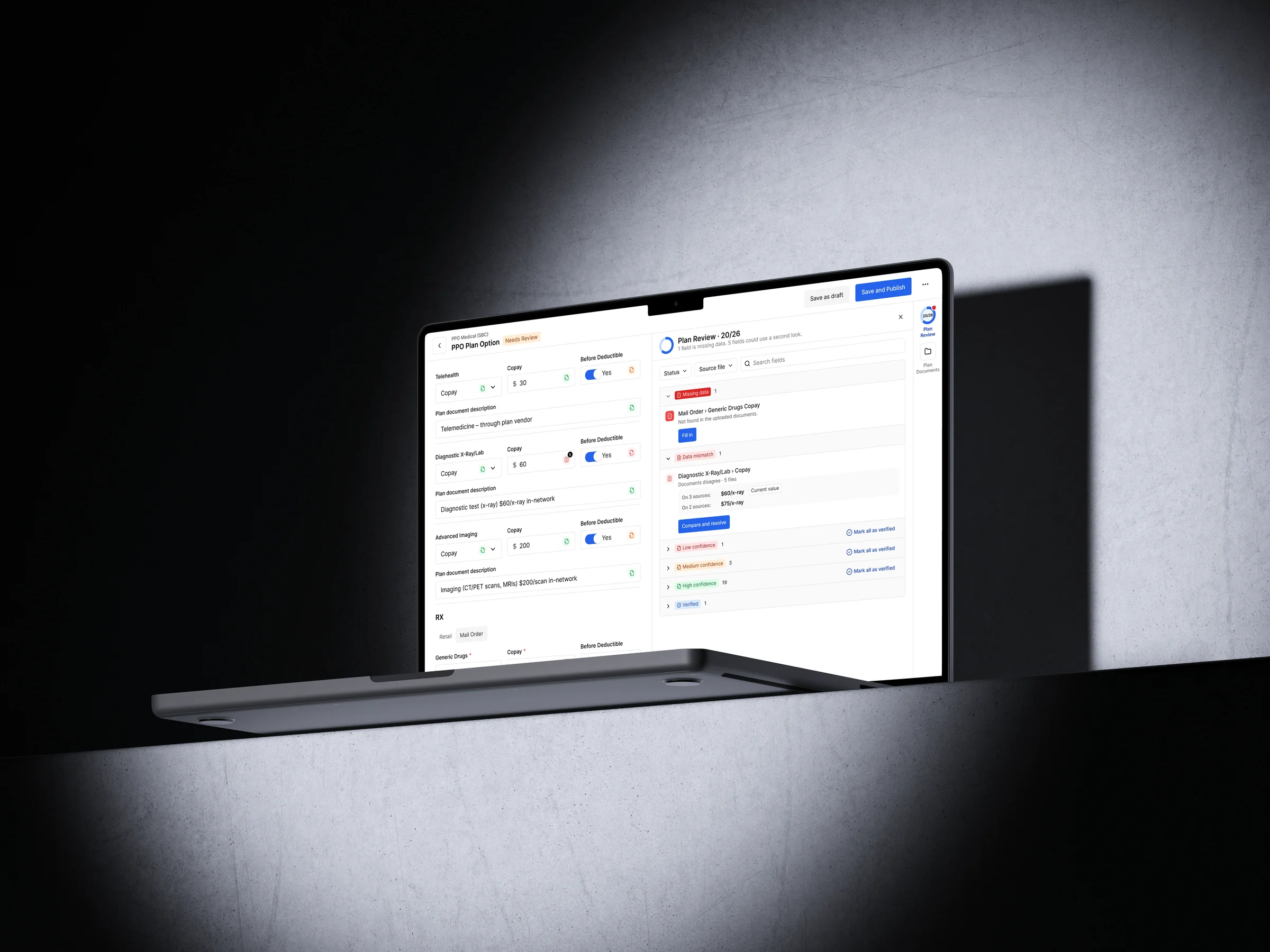
Pasito’s AI pulls plan data out of carrier documents, but brokers couldn’t see where each number came from, so they re-checked every one by hand. I set out to give them that time back.
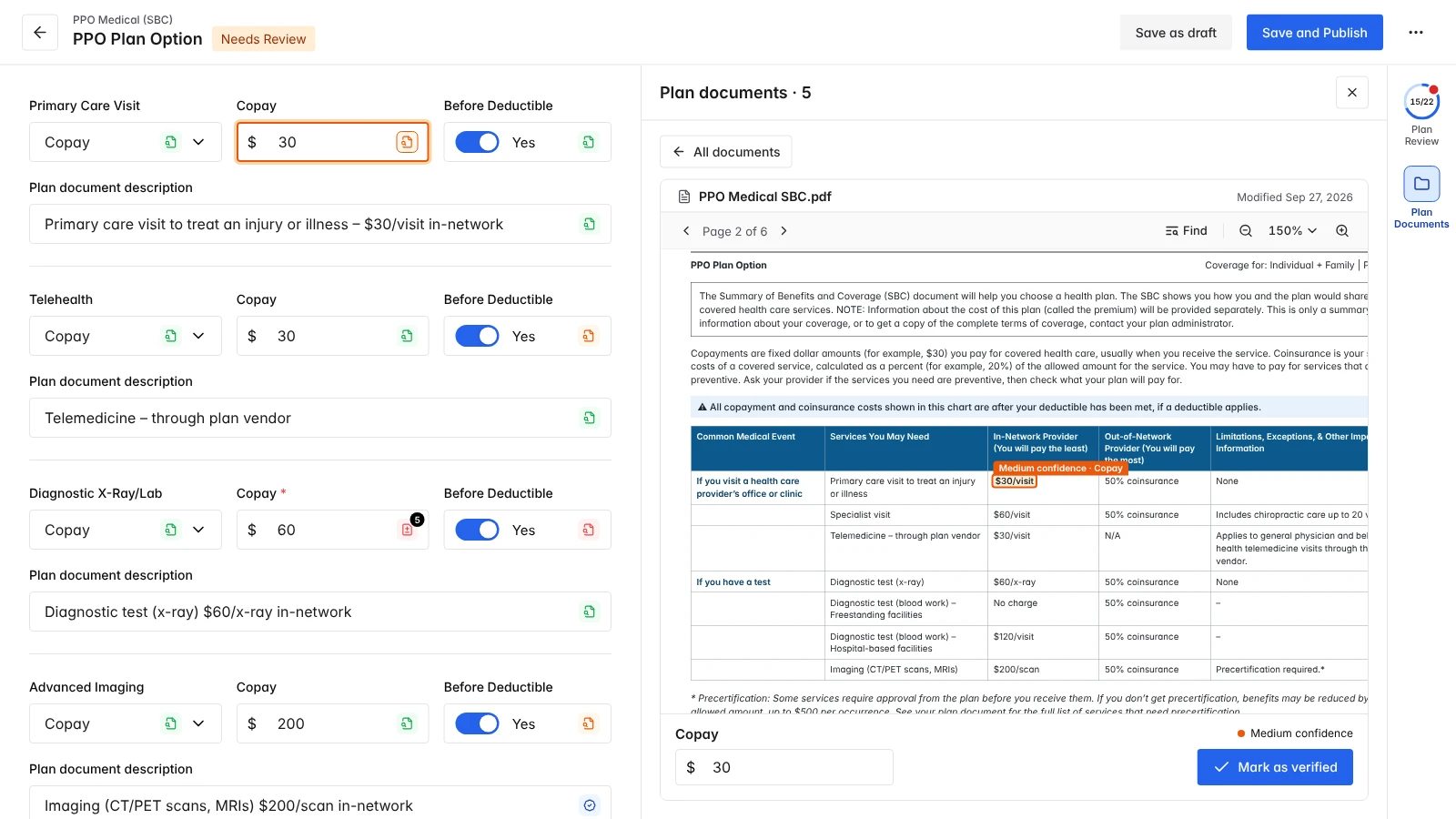
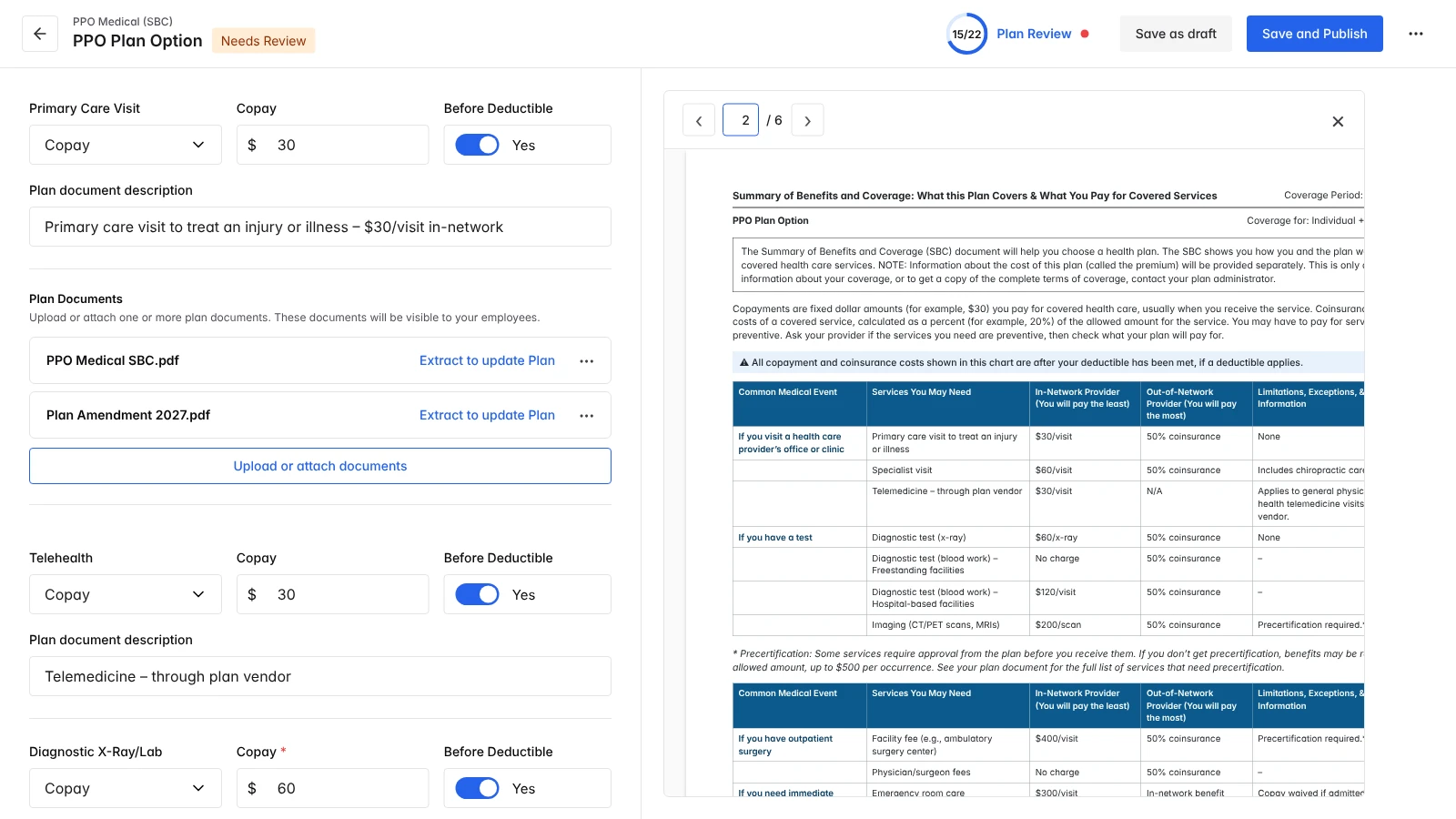 BeforeAfter
The problem
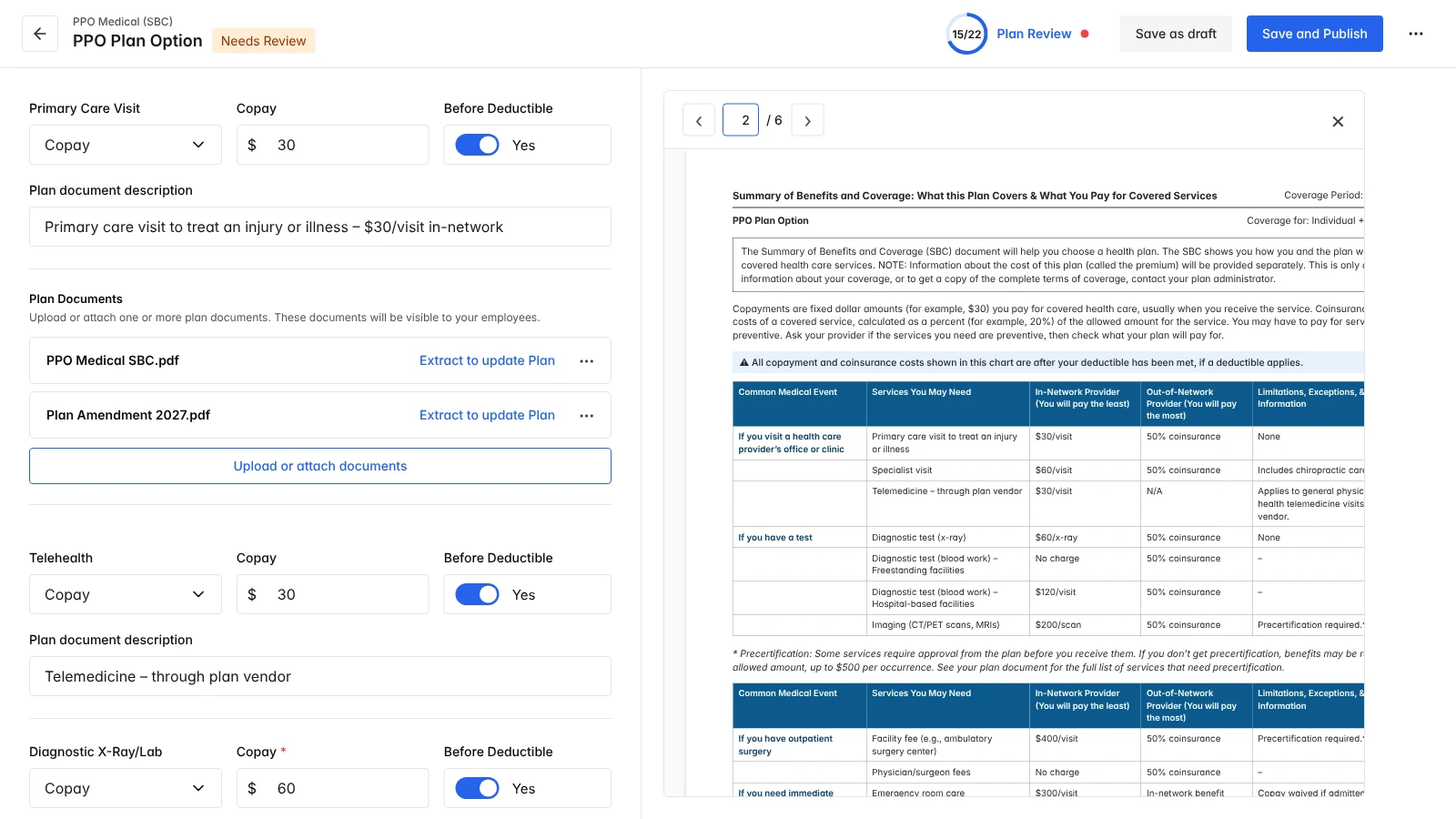
A broker sees $1,500 in one of the plan’s fields. It’s almost certainly right. Still, they open the PDF, search for “1,500”, find three matches and work out which one is the right value.
Now do that 200 times per plan. Checking took almost as long as the manual work the AI was meant to replace.
A quick primer
Pasito helps employees access, understand and use their benefits. Brokers use it to build the materials employers rely on to choose medical, dental and vision coverage, so one wrong value is costly. Pasito’s AI extracts 200+ values from each carrier’s plan with 98.5% accuracy, but brokers had no way to see if those values were reliable.
Starting point
The AI already filled the plan, but nothing showed why, so every value got the same suspicion.
The question
Reality
Startups move fast, and we had one week. Pointing to a value on the page sounds simple, until you follow a broker through a real plan. Here’s what came up, in the order they’d meet it:
The broker opens a plan and lands on Plan Review.
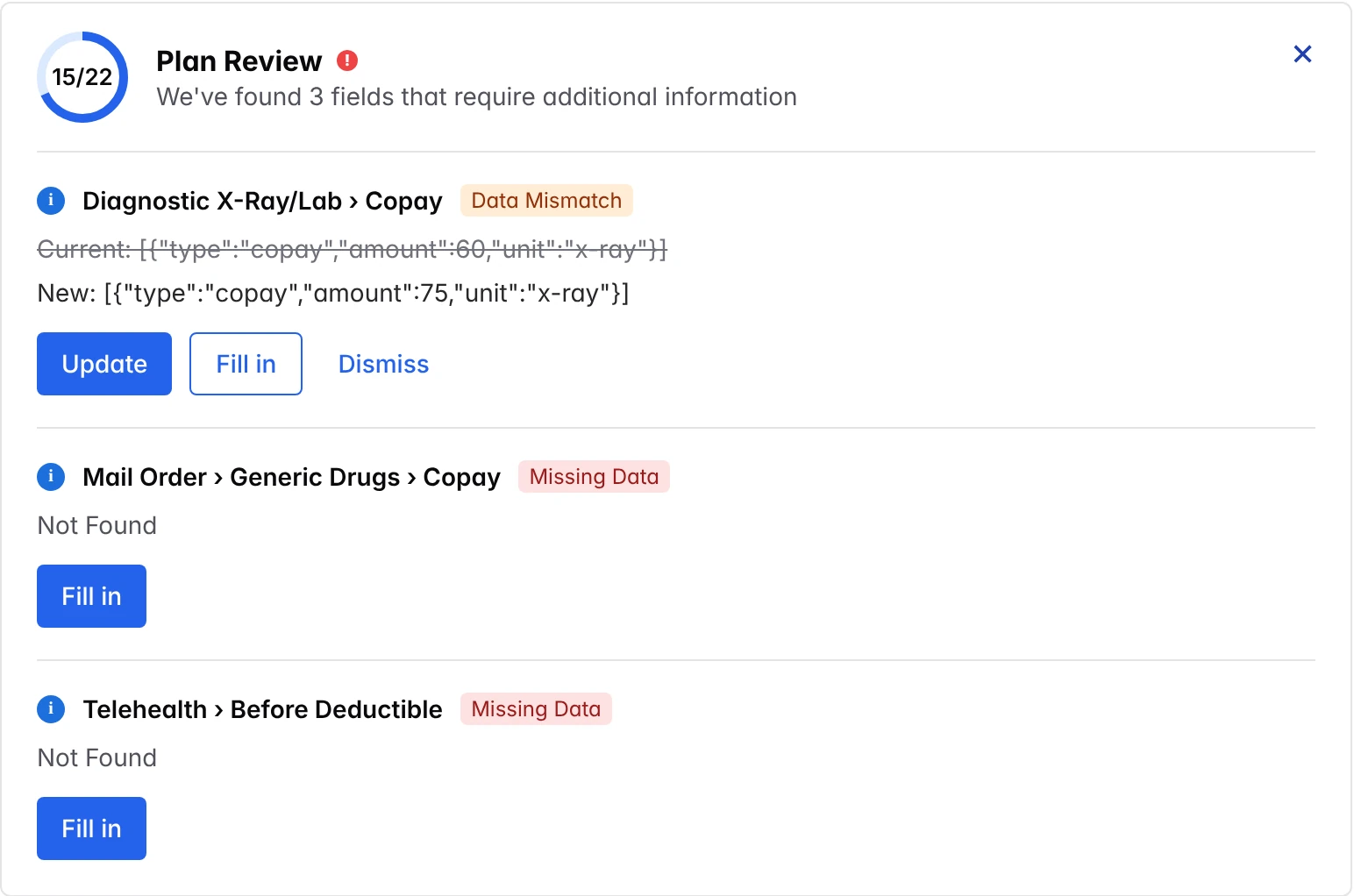
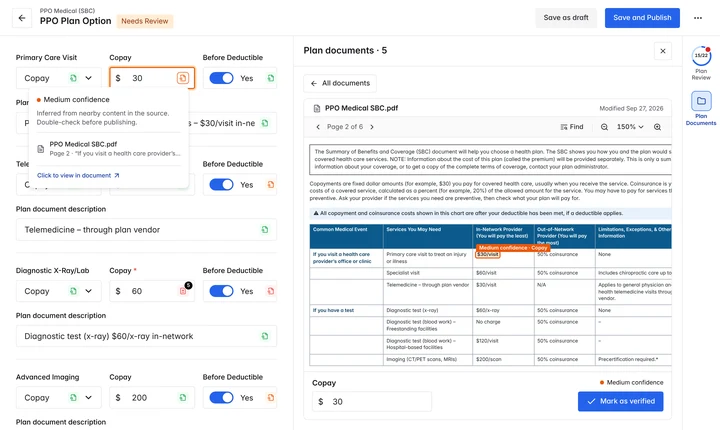
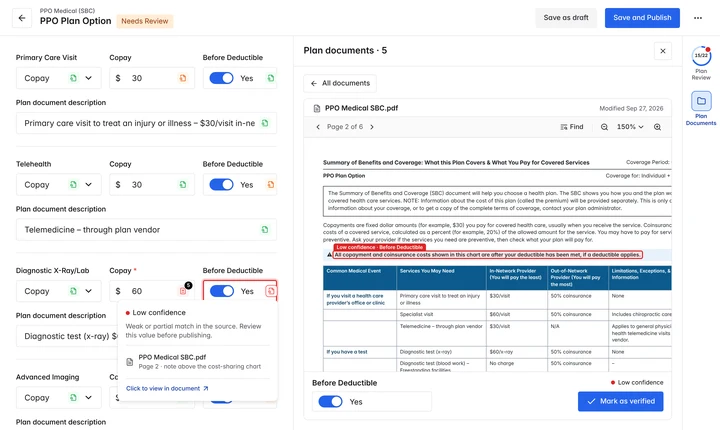
They open an item to see how sure the AI is.
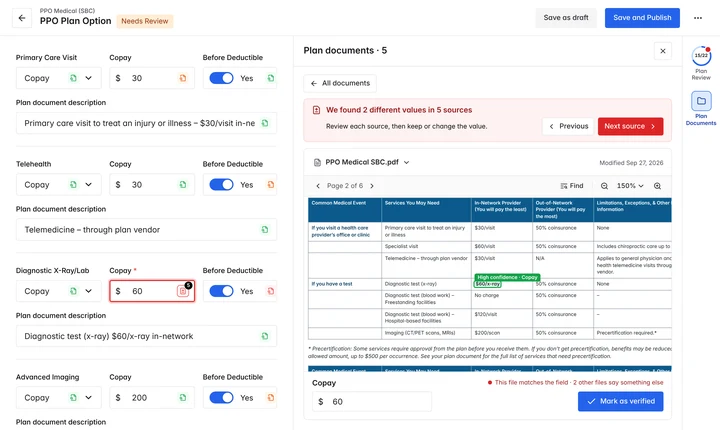
Sometimes the sources disagree.
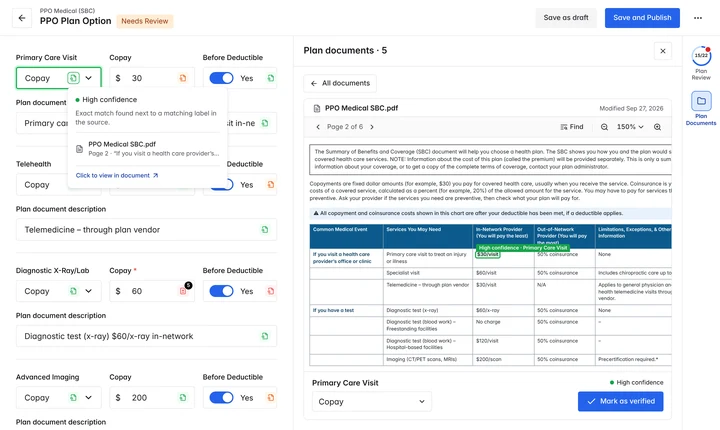
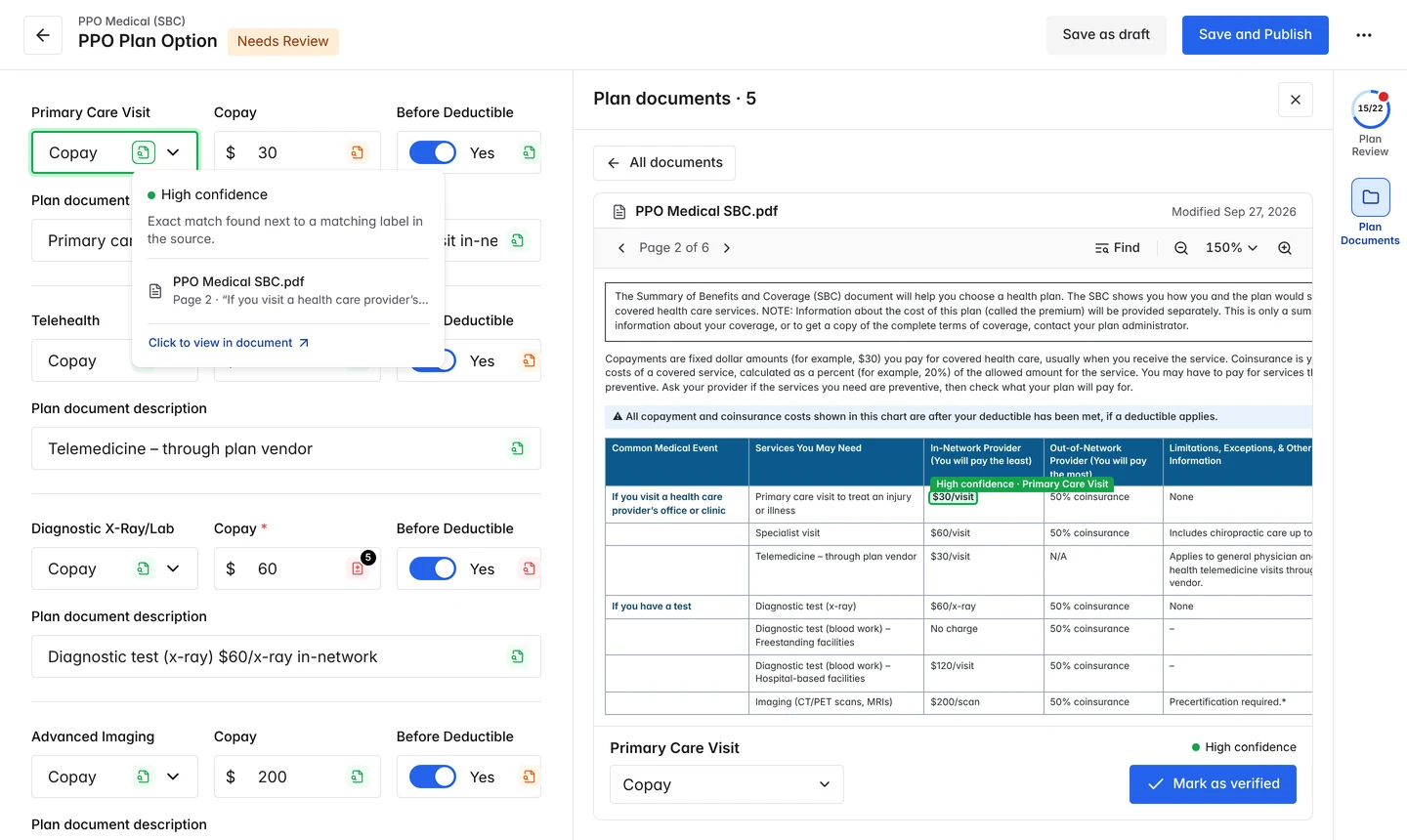
Clicking a field opens the document at its highlight.
Some brokers prefer to review one file at a time.
Later, a carrier sends a revised document.
All along, the AI is learning.
Decisions
A neat box on every field looks consistent, but it’s sometimes wrong. So the highlight follows the confidence: exact when we’re sure, the area when we’re close, the page when that’s all we know.
This feature only makes sense when you move through real documents, and static screens couldn’t show that. So I turned my designs into a working prototype with Claude.
Testing
I built the test into the prototype itself: real tasks, one at a time, with quick questions after each. Four sessions I moderated; one ran on its own.
Some needed help understanding a prompt, but nobody needed help doing the task itself.
By the end, everyone recognised every status icon on sight.
New users wanted the alert to say what happened, so I rewrote it between sessions.
Not perfect: the mission prompts’ interface was built in a rush, and it showed: some needed explaining because participants skipped parts of them. Next time I’d improve the prompts UI before testing.
AI, honestly
Handoff
The lead engineer got three things, and the prototype showed real behavior instead of static frames.
Not perfect
I wanted to test with more people, but building the testing tool took a big part of the week, so we stopped at five.
Event tracking didn’t make this deliverable: the flow was too complex to instrument well in time, so V1 launches without it for now.
The testing tool did its job and gave me answers within the week. Its interface, though, was still rough.
V1 is in QA behind a feature flag. Usage data comes with the next sprint.
The prototype and testing tool shortened the testing period: what used to take over an entire sprint took half of it.
This project showed me how much time I’d save with an internal tool ready to build the tests and turn the missions into the main events to track. That led to Pasito Design Lab, the next project in this portfolio.